
Vinyl Flooring vs Tiles vs Hardwood : Best Flooring for NZ Homes
Choosing the right flooring is one of the most consequential decisions in any home renovation. In New Zealand’s unique climate, flooring must be exceptionally resilient, engineered to withstand high UV levels, manage fluctuating coastal humidity, and provide long-term durability. Whether you are considering vinyl plank flooring in NZ or professional vinyl flooring installation, understanding how materials react to our local environment is key.
At Manomay Renovations, we believe the “best” flooring is defined by performance rather than just aesthetics. As we move through 2026, technological advances have made these materials more versatile than ever, yet each remains distinct in its suitability for specific areas of the home. Here is how the three primary options compare for local residential projects.
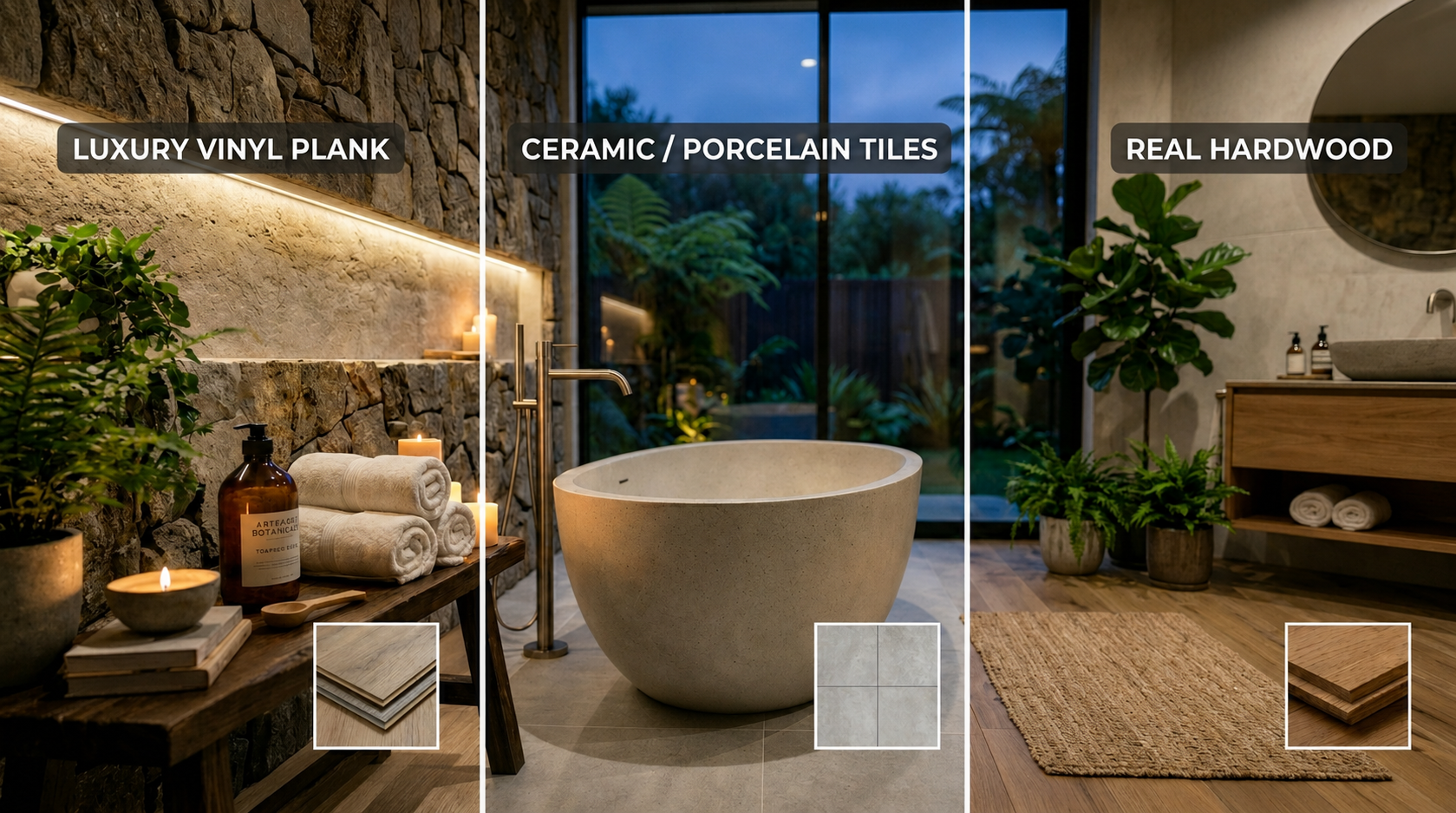
1. Ceramic & Porcelain Tiles: The Durable Gold Standard
Tiles remain the premier choice for high-traffic zones and areas prone to moisture. In 2026, the trend has shifted toward “zonal” tiling, where the same material is used to create a seamless transition between different sections of the home.
- Performance: They are entirely waterproof and offer the highest thermal mass, making them the most efficient companion for underfloor heating systems.
- The 2026 Trend: Large-format porcelain slabs. By significantly reducing the number of grout lines, these tiles create a sophisticated, stone-like finish that is easier to maintain than traditional smaller tiles.
- Considerations: While incredibly durable, tiles are a "hard" surface. Professional installation is vital to ensure the subfloor is perfectly level, preventing cracks over time.
Manomay Tip: On our service pages, we emphasise our expertise in “Precision Tiling.” For modern homes, we typically recommend porcelain over ceramic; its higher density makes it more resistant to heavy impacts, a crucial factor in busy kitchens and hallways.
2. Luxury Vinyl Flooring (LVP/SPC): The High-Performance All-Rounder
Vinyl has evolved far beyond its humble origins. Modern Luxury vinyl plank flooring in NZ is now a high-performance contender that often rivals natural materials in both look and practicality.
- Performance: Most modern vinyl is 100% waterproof, allowing for a consistent flooring design that flows from the front entrance through to kitchens and laundries.
- The 2026 Trend: SPC (Stone Plastic Composite). This rigid-core technology is designed for stability. Unlike older materials, SPC is engineered to resist expansion and contraction even when exposed to direct sunlight through large glass doors or windows.
- Considerations: While it provides excellent dent resistance, it does not offer the same acoustic depth as genuine timber. Professional vinyl flooring installation is recommended to ensure correct expansion gaps are maintained.
3. Engineered Hardwood: The Timeless Investment
Nothing quite matches the prestige and natural warmth of real wood. In 2026, the industry has largely shifted away from solid timber toward Engineered Hardwood due to its superior structural stability.
- Performance: Engineered timber features a real wood veneer atop a cross-layered base. This construction is specifically designed to resist the "cupping" or warping that can occur in humid coastal environments.
- The 2026 Trend: Oak and Matte Finishes: Low-sheen, natural tones are currently favoured for their ability to hide dust and scratches while providing a modern, high-end feel.
- Considerations: This is generally the most significant financial investment. While it can be sanded and refinished, it is not recommended for high-moisture areas like bathrooms.
Comparison Matrix for 2026
Feature | Porcelain Tiles | Luxury Vinyl (LVP/SPC) | Engineered Hardwood |
Water Resistance | 100% (Waterproof) | 100% (Waterproof) | Moderate (Splash-proof) |
UV Stability | Excellent (No Fade) | High (SPC-Specific) | Moderate (May Fade) |
Maintenance | Low (Sweep & Mop) | Lowest (Easy-clean) | Moderate (Requires care) |
Heating Support | Best for Underfloor | Good compatibility | Specific types only |
Aesthetics | Precision / Modern | Versatile / Practical | Premium / Natural |
Decision Guide: Which Fits Your Project?
- Opt for Tiles if: You are renovating a bathroom, kitchen, or a sun-drenched entry area where maximum durability and ease of cleaning are non-negotiable.
- Opt for Vinyl if: You require a unified, "worry-free" floor that can handle the rigours of a busy household, including pets and heavy foot traffic, without the price tag of hardwood.
- Opt for Hardwood if: You are looking to maximise the resale value of your property and desire the genuine texture and character of real timber in your primary living spaces.
The Manomay Approach
In 2026, many successful renovations involve a strategic mix: high-spec porcelain tiles in “active zones” (kitchen and bath) and luxury vinyl or timber in “rest zones” (living areas and bedrooms).
At Manomay, we specialise in the technical installation of all three. Whether it is ensuring your tiles are perfectly aligned or your planks are laid with the correct expansion gaps for local conditions, we ensure your flooring is an enduring asset to your home.
Frequently Asked Questions (FAQs)
1. Is vinyl plank flooring in NZ suitable for north-facing rooms with lots of sun?
Yes, but the type of vinyl matters. At Manomay, we recommend SPC (Stone Plastic Composite) vinyl for sun-drenched Kiwi homes. Its rigid core is specifically engineered to handle high temperatures and UV exposure without buckling or warping like older vinyl products might.
2. Why is professional vinyl flooring installation better than a DIY approach?
While many products are “click-lock,” professional installation ensures the subfloor is perfectly prepped and the correct expansion gaps are left around the perimeter. Without these, even high-quality vinyl can “peak” or gap when New Zealand’s humidity and temperatures fluctuate.
3. Can I use underfloor heating with all of these flooring types?
Porcelain tiles are the most efficient for underfloor heating due to their thermal mass. However, many modern luxury vinyls and specific engineered woods are now compatible. It is essential to check the manufacturer’s temperature limits, which the Manomay team can help you navigate during planning.
4. How does vinyl flooring compare to tiles in terms of maintenance?
Both are low maintenance, but vinyl is generally more “forgiving.” Tiles require occasional grout cleaning to keep them looking new, whereas vinyl provides a seamless surface that can be easily mopped. For households with pets or young children, vinyl often provides a softer, quieter surface.
5. Which flooring option adds the most value to a New Zealand home in 2026?
Engineered hardwood typically offers the highest aesthetic “prestige” and resale value for living areas. However, high-quality porcelain tiling in kitchens and bathrooms is considered a “must-have” for premium valuations. A hybrid approach, using the right material in the right zone, is usually the smartest investment.